
If you recently converted to Islam, you have undoubtedly discovered that one of the most significant tenets of the religion is Salah, or the five daily prayers. You may have learned the motions, committed the phrases to memory, and begun praying on a regular basis. Have you ever wondered, though, if prayer is more than simply following the steps?
The answer is yes, and Islamic scholars have identified five different levels of Salah, each of which reflects a unique aspect of connection, presence, and focus. You may determine where you are in your trip and, more importantly, where you are going by being aware of these levels.
Level 01 — Careless
The weakest level of prayer is said to be this.
At this point, a person could rush through the prayer, become sidetracked, or even inadvertently skip some of it. While the head and heart are elsewhere, the body is going through the motions.
This usually just indicates that the person is just starting to develop the practice of praying, not that they are terrible. This might be depressing, especially for new Muslims. It's crucial to remember that attendance is still vital. Even a flawed prayer is a step in the right direction.
Level 02 — Correct but Distracted
Many Muslims, particularly those who have been practicing for a long time, spend a significant portion of their lives on this level, which is thought to be fairly prevalent.
The prayer is correctly done at this level. Nothing is overlooked, the postures are correct, and the phrases are pronounced correctly. But the thoughts continue to wander—to work, to a discussion, to dinner. While in prayer, the individual is mentally elsewhere but physically present.
You are not alone if this sounds familiar to you. Acknowledging this level is a sort of awareness and development in and of itself.
Level 03 — Fighting Distractions
This is where a significant change occurs: the effort is rewarded.
A person is actively attempting to concentrate at this level. When their thoughts stray, they become aware of it and correct it. Even though they may encounter difficulties more than once during a single prayer, they persevere. Islamic scholars stress that this struggle is an act of worship in and of itself and is not a failure.
This is a really encouraging phase for new Muslims. To have a meaningful prayer, you don't have to be completely focused. The effort matters.
Level 04 — Focused
At this level, the person has developed genuine attentiveness in prayer.

They are calm, present, and — crucially — they understand what they are saying. The Arabic words are no longer just sounds; they carry meaning. This understanding creates a strong connection in prayer, turning recitation into a real conversation with Allah.
This is why learning the meaning of what you recite in Salah is so valuable. Even memorizing the translation of Surah Al-Fatiha (the opening chapter recited in every prayer unit) can significantly deepen your experience.
Level 05 — Deep Connection
This is the aim, the pinnacle of Salah.
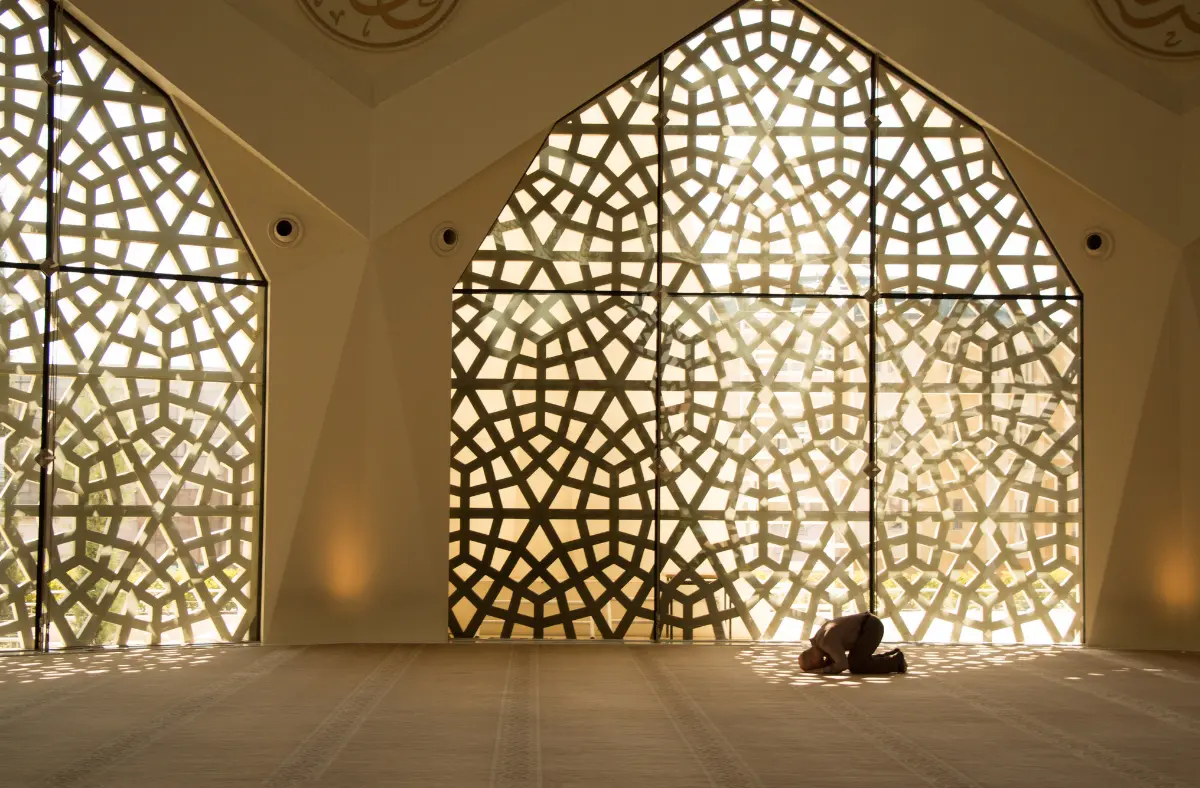
During prayer, a person at this level experiences a true intimacy with Allah. They now look forward to the prayer rather than it being a chore. According to scholars, this is a condition of humility and complete presence before God, known as "khushoo" (خشوع).
Scholars and saints are not the only people who can reach this level. Any Muslim can progressively work toward it with perseverance and effort.
What This Means for You as a New Muslim
The most crucial lesson to be learned from these five stages is that prayer is a journey rather than an exam that you must pass or fail.
From one prayer to the next, you will probably switch between these levels, and that is very normal. On certain days, your Asr (afternoon prayer) may feel hurried, while your Fajr (dawn prayer) may feel deeply linked. What counts is that you continue to grow and pray.
The following useful advice will help you advance through the levels:
- Discover the significance of the words you recite. A simple translation of the brief surahs you recite during prayer can have a significant impact.
- Go more slowly. One of the biggest obstacles to concentration is rushing. In every position, take your time.
- Before you pray, get ready. Before you start, take a breath, face the qibla, and make wudu (ablution) thoughtfully.
- Have self-compassion. The Prophet ﷺ's companions also mentioned having trouble focusing during prayer. You're in excellent company.
Final Thought
You should be thankful that you are praying, regardless of your level of engagement. Islam calls for sincerity and effort rather than perfection. Salah will become less of a duty you fulfill and more of a haven you return to as you gain more knowledge and experience.
May you get closer to Allah by your prayers, one step at a time.
Source:
The 5 Levels Of Salah (Which One Are You Really?) : https://youtu.be/ZW3l3iwJmPE
By :
Sh. Abdullah Oduro , Sh. Abdullah Oduro was born in Arlington, Texas and raised in Houston, TX. He converted to Islam in 1997, a year later, he made Hajj for the first time and in 1999 he was accepted to the Islamic University of Al-Madinah, where he graduated from the faculty of Islamic Law in 2007.